Categoria: Temáticas

  • Fazer musculação para ser GRANDE mais saudável – Parte 1

    Fazer musculação para ser GRANDE mais saudável – Parte 1

    Vítor Ilharco
    Personal Trainer

    As recomendações de atividade física da Organização Mundial de Saúde são claras: além de realizarem entre 150 a 300 minutos de atividade física aeróbia semanalmente (caminhadas, corrida, bicicleta, natação, dança…), de intensidade moderada, os adultos devem incluir atividades de fortalecimento muscular, de intensidade moderada ou vigorosa, que envolvam os principais grupos musculares, pelo menos dois dias por semana.
    Os estudos mostram que os portugueses são bastante inativos; no entanto, essa realidade não se deve a falta de conhecimento. Tal como os fumadores sabem que fumar é prejudicial à saúde, a população inativa também está consciente dos benefícios da prática de atividade física. Mas será que a maioria das pessoas conhece os benefícios do treino de força?
    A minha experiência de 10 anos como profissional da área diz-me que não. O treino de força, vulgarmente conhecido como musculação, é frequentemente associado apenas à vertente estética. É geralmente praticado por homens ou mulheres que desejam aumentar o volume muscular, seja do corpo inteiro ou de áreas específicas como peitorais, glúteos ou coxas.
    Uma grande parte das pessoas que inicia a prática em ginásios faz questão de referir que não quer “ficar grande”, ou seja, não pretende aumentar significativamente o volume muscular. É frequente as mulheres indicarem que desejam apenas tonificar, os homens que querem apenas perder peso ou “ficar em forma”, e os mais idosos manifestarem o desejo de “apenas” serem mais saudáveis e terem menos dores. Pois bem, o treino de força é recomendado e essencial para alcançar qualquer um desses objetivos.
    Ter um corpo mais tonificado nada mais é do que melhorar a composição corporal, reduzindo a massa gorda e aumentando a massa muscular. Para isso, um programa de perda de gordura é importante, mas deve ser complementado com trabalho de fortalecimento muscular. Este aumento de massa muscular é o que confere a tonicidade e rigidez desejadas.
    Para quem pretende perder peso, o controlo da ingestão calórica, ou seja, consumir menos calorias do que aquelas que o corpo gasta diariamente, pode ser suficiente a curto prazo. Contudo, essa abordagem está frequentemente associada a uma perda considerável de massa muscular. Como a massa muscular é metabolicamente ativa e consome muitas calorias, uma redução significativa da sua quantidade facilita o regresso dos quilos indesejados. Assim, é crucial que um programa de perda de peso inclua exercícios de fortalecimento muscular, garantindo a manutenção dos resultados a longo prazo.
    Fica a faltar abordar os benefícios do treino de força para quem deseja “apenas” ser mais saudável. Estes serão detalhados na edição de 26 de dezembro, ajudando-o a traçar melhor as suas resoluções de Ano Novo e a compensar os excessos típicos da época natalícia. ■

  • Hoje é o Dia Mundial da Diabetes

    Hoje é o Dia Mundial da Diabetes

    Joana Louro
    médica

    Assinala-se precisamente hoje o Dia Mundial da Diabetes! Tema incontornável: Primeiro porque sou Diabetologista e uma verdadeira apaixonada por esta patologia, mas sobretudo porque a diabetes representa o grande paradigma da Doença Crónica.
    O mundo mudou, a conceção de trabalho e emprego mudou, a sociedade e as pessoas mudaram, mas sobretudo o conceito de Saúde e de cuidados de Saúde mudou… ou melhor estão em constante mudança, num mundo altamente imprevisível. E o paradigma da doença aguda tem vindo a ser progressivamente substituído pelo peso das doenças crónicas.
    Cada vez se vive mais, mais anos. Mas infelizmente em Portugal viver mais, não significa viver melhor. Bem pelo contrario. Somos dos países mais envelhecidos, mas com menos anos de vida de qualidade. E enquanto sociedade precisamos de refletir sobre isso. E mudar este desígnio… Só é importante vivermos mais, se vivermos melhor. É este o foco do envelhecimento ativo.
    Não há processo mais certo que o envelhecimento. Mas não deixa de ser curioso, porque sendo o envelhecimento absolutamente transversal a todas as pessoas, é dos processos biológicos mais individualizados que existe. Não envelhecemos todos igual! Fruto da nossa carga genética mas sobretudo fruto das nossas escolhas (ou não!) e da vida que tivemos e escolhemos ter.
    As doenças agudas têm efetivamente menos peso na carga de doença, porque são tratáveis ou preveníveis. E neste ponto a vacinação tem uma importância crucial! As vacinas são dos medicamentos que mais vidas salvaram na História da Humanidade! Mas isto são outros quinhentos…
    Nesta nova dimensão de Saúde, a doença crónica ganha peso, porque as pessoas vivem mais, mas com mais carga de doença. Que não tendo cura, pode ser controlada e estabilizada. A Diabetes é o grande exemplo disso. Os números desta pandemia são avassaladores. Em 2021, 537 milhões de pessoas viviam com diabetes, estima-se que esse número aumente para 643 milhões em 2030. A cada 7 segundos, morre uma pessoa devido à diabetes.
    Temos de travar esta pandemia pelo impacto da carga de doença no individuo em particular, mas também na sociedade. Os pilares da prevenção da Diabetes são os mesmos do tratamento da Diabetes (depois do diagnóstico estar estabelecido): um estilo de vida saudável, assente numa alimentação correta e equilibrada, pratica regular de exercício físico, sono de qualidade e reparador, promoção de saúde mental e evidentemente medicação modificadora de prognóstico.
    Prevenir as complicações e otimizar a qualidade vida são os principais objetivos na abordagem da Diabetes. Na verdade estes objetivos são transversais a qualquer doença crónica e a todo o processo de envelhecimento.
    Porque nos dias de hoje o foco não deve estar no tratamento da doença, mas na promoção de saúde. E uma população mais saudável é um fator critico para uma sociedade mais produtiva, sustentável e economicamente competitiva, ou no final de tudo, mais feliz! ■

  • Room Rentals in Portugal: A Viable Option for Extra Income and Investment

    Room Rentals in Portugal: A Viable Option for Extra Income and Investment

    Photo: Ketut Subiyanto

    By Flavia L. Lamattina

    The Portuguese real estate market has a vibrant segment that is often neglected elsewhere: room rentals, which can serve as extra income for families but also as an alternative business model for investors in the Silver Coast region. Initially thought to cater to students or newcomers to the country, this type of rental has attracted people with various backgrounds and needs.
    An interesting group of tenants consists of people aged 30 to 40, including professionals like teachers and nurses who have to move frequently. Despite having steady employment, many find it difficult to cope with high rental prices and the scarcity of housing. Couples saving to buy their first home and visitors planning extended stays of up to six months may also seek rooms for rent.
    According to the real estate website Idealista, the demand for rooms has increased by 71% in recent months, even with rising prices. The supply has also grown significantly: in Lisbon by 147%, in Porto by 107%, and in Leiria by 96%. None of the 15 main Portuguese cities showed a decrease in supply, and prices increased by an average of 35% over the past year. The rental price for rooms in Leiria rose by 17%, averaging 300 euros per month. In Lisbon, the cost can reach 500 euros, and in Porto, 400 euros. In the Caldas da Rainha region, the average price varies between 16 and 20 euros per square meter, depending on the property’s condition.
    As for legal and contractual considerations, it is crucial for both tenants and landlords to understand that room rentals follow the same rules as house and apartment rentals. The Portuguese law provides for 3 leasing options, which are: renting the entire property to a single person or a family; renting the entire property to a group of people (for example, a group of friends) in a single contract; renting parts of the property to different individuals with separate contracts. The contract to be used in a room rental is the “Arrendamento de Quarto para Habitação em Prazo Certo”, or Fixed-Term Room Rental for Housing, which can be easily found online and should specify aspects such as: description of the rented space and clear definition of shared spaces like the kitchen, bathroom, laundry room, garden, or terrace; duration of the lease (renewal conditions and minimum stay periods), rent amount and payment terms. Also the landlord should attach the Energy Certificate, property usage license, and prohibition clauses such as subletting, hosting guests, pets, and non-residential uses. It is also essential to establish house rules before signing the contract, such as quiet hours, use of common areas, permission for visitors, cleaning, and sharing of utility expenses (water, electricity, internet, gas). The contract should also indicate whether the room is furnished or not. In case of students, the landlord can require a guarantor, to be responsible for debts or obligations of an unemployed individual.
    Besides the rental contract, there is another important document that should be consulted: Novo Regime de Arrendamento Urbano (NRAU), or New Urban Lease Regime, which clarifies rules regarding repairs, contract renewals, evictions, and the tax-deductibility of rental expenses for primary residences. Even if the contract is signed for a few months, there is an automatic renewal for another year unless specified otherwise. The landlord can request a security deposit and compensation of 20% for late payments, in addition to repairs for damages caused to the property. To avoid disputes, it is recommended that the contract include an inventory of the property’s condition with photographic attachments. Also, the landlord must calculate the monthly expenses for utilities, since those are typically billed between 30 to 60 days after the consumption period. They must also advise the tenant about the impact on the security deposit in case the tenant moves out before the bills come.
    As a good reminder for tenants, the room rental contract is tax-deductible. The contract must specify how to pay the rent and how the receipts will be issued. The contract also must specify the landlord’s obligations to maintain the property in its rented condition, along with communication and dispute-resolution terms. The contract must be signed and registered, which involves paying the Imposto de Selo (stamp duty), possible online through the Portal das Finanças (Tax Authority Portal).
    Before deciding to rent a room, it is essential to understand all the legal and financial details involved. Proper preparation prevents issues of non-compliance, fines, and disagreements between tenants and landlords. The savvy investor will think about location and ponder initial investments such as furniture and kitchen appliances. Pleasing aesthetics, irreproachable cleanliness and a good atmosphere will attract good tenants. ■

  • Sedentarismo ativo

    Sedentarismo ativo

    Vítor Ilharco
    Personal Trainer

    Dois dos termos mais confundidos, no que à atividade física diz respeito, são o sedentarismo e a inatividade. Um adulto fisicamente inativo é alguém que não cumpre as recomendações da Organização Mundial de Saúde de 150 minutos de atividade aeróbica moderada ou 75 minutos de atividade vigorosa por semana. Ser fisicamente ativo (ou seja, cumprir as referidas recomendações) promove benefícios para a saúde, como a redução do risco de mortalidade prematura, de mortalidade por doenças cardiovasculares, de hipertensão, diabetes e alguns tipos de cancro, bem como a melhoria da saúde mental e cognitiva.
    Por outro lado, uma pessoa sedentária é alguém que passa grande parte do tempo do seu dia deitado, sentado ou reclinado, enquanto acordado. Um adulto sedentário tem um risco aumentado de mortalidade prematura, de mortalidade por doença cardiovascular e oncológica, além de maior probabilidade de desenvolver doenças cardiovasculares, oncológicas e diabetes.
    É possível, e até provável, que alguém possa ser simultaneamente sedentário e fisicamente ativo. Por exemplo, um adulto que faça exercício físico três vezes por semana durante uma hora cumpre os requisitos para ser considerado ativo. No entanto, se essa mesma pessoa se deslocar de carro para o trabalho e a sua atividade laboral for maioritariamente sentada, será considerada sedentária.
    Embora os indivíduos sedentários tenham um maior risco de morbilidade e mortalidade, independentemente do seu nível de atividade física, podem beneficiar se realizarem um volume ainda superior aos 150 minutos de atividade semanal recomendados. No entanto, o mais interessante será reduzir o tempo passado em comportamento sedentário. Para tal, deverá optar por deslocar-se mais a pé, utilizar as escadas em vez do elevador ou trocar o tempo de lazer sentado no sofá por atividades que envolvam movimento.
    Nos momentos laborais, em que não é fácil alterar os procedimentos, o ideal é interromper o comportamento sedentário de 30 em 30 minutos. Para isso, basta levantar-se, alongar e fazer pequenos movimentos. Não só será positivo para a sua saúde a longo prazo, como também poderá reduzir algumas dores musculoarticulares.
    Assim, apesar de parecerem termos semelhantes, são bem diferentes. Ter mais literacia sobre estes conceitos pode ser útil para compreender quais os passos necessários para uma vida mais saudável. ■

  • Why learn Portuguese when the Portuguese can speak English?

    Why learn Portuguese when the Portuguese can speak English?

    In recent years, Portugal has become an increasingly popular destination for travelers and migrants from non-Portuguese-speaking countries. By and large, the people of Portugal are welcoming of foreigners. However, their acceptance of newcomers can hit a barrier, specifically a language barrier, most notably outside the centers of international attention such as Lisbon or the Algarve.
    I have been teaching Portuguese as a Second Language to adult learners for about three years. I have helped students from beginner to advanced prepare for their language exams. I have seen the ups and downs students experience adjusting to a new culture, to a new society, and, of course, to new ways of communication.
    A lot of people online argue that you don’t really need to speak Portuguese to get by in Portugal since most locals speak English. That might be true to a degree, especially for digital nomads or in international business settings. Still, as many learners tell me, “It ends up feeling like I am surviving in the country instead of living in it.”
    You will also need a level of proficiency to interact with state authorities. If your interlocutor deems your language skills insufficient, they will require the presence of a translator. If you are a non-EU migrant, an A2 certificate is a prerequisite for citizenship after 5 years of residency. Contracts and other documents are usually strictly in Portuguese and the burden of hiring a bilingual lawyer or an official translator is on you. If you plan on going to university, you will need a B1 level or above, depending on your field.
    As in any other country, your appreciation for the language, the people, and the culture will deepen as your knowledge of Portuguese grows. The level you need to reach may vary depending on where you live. In the city, there will be other foreigners and you can build your inner circle around them. In the countryside, you will have to communicate effectively with native speakers to gain admittance into the tight-knit community. Learners say this is challenging but also immensely rewarding.
    Portuguese is a romance language, a descendant of Latin. It is most similar to Spanish and Italian. It also shares some of its grammar and vocabulary with French and Romanian. If you speak a romance language, you have a built-in advantage. Otherwise, the transition will be harder, but you still can become fluent in Portuguese!
    The language can seem like a dense thicket of grammatical rules, exceptions to those rules, verb tenses, and idiomatic expressions. As a romance language, each verb comes with a big number of conjugations, and that alone can be overwhelming at first. My advice: start with the simple present and the simple past, and learn to recognize patterns of use in context.
    Students often complain about Portuguese sounding different from its written form. I tell them the Portuguese tend to speak in shortcuts. Unlike Brazilian Portuguese, with its rhythm and melodic intonation, European Portuguese can seem clipped and monotonic. Portuguese speech is more connected. Individual words are harder to understand.
    When you start learning Portuguese, you may find reading much easier. You might recognize Latin cognates. You can analyze each word and look up its meaning. Listening is more unforgiving. You have to rely mostly on the gist of it. Learners find this skill hard to train and often feel discouraged when they do not understand everything.
    Now, say you have been learning Portuguese for a while. You are getting the hang of it! You feel confident enough to go beyond “Olá! Bom dia, tudo bem?” You start chatting with your local store clerk. But why are they still replying in English? This can be due to many different factors. One is basic hospitality: service workers often feel they should accommodate you and your circumstances. Therefore, to spare you from further “struggles,” you are given the opportunity to speak English. Also, you are an English speaker and they want to learn from you. Most Portuguese do not get to practice their English unless they engage with foreigners. Yet they may still be struggling to understand you – my personal assumption is many Portuguese are not exposed to different accents and have a hard time processing differences in diction. Moreover, if you are trying to practice your Portuguese in a busy environment, a clerk may simply want to speed things along so they can serve more people. Please do not consider this to be rude: it is just good customer service.
    Do not give up! There will be obstacles, but that does not mean that you are not making progress. Perseverance is key to attaining conversational Portuguese. Do not let negative reactions demoralize you. Most Portuguese are appreciative of your efforts and will most definitely agree that you are, truly, trying your very best. ■ Joana Santos Portuguese teacher


  • Trombose: importância da prevenção e diagnóstico precoce

    Trombose: importância da prevenção e diagnóstico precoce

    Rodrigo Leão
    Núcleo de Estudos de Prevenção e Risco Vascular da SPMI_

    Criado em 2014 pela Sociedade Internacional de Trombose e Hemostase, o Dia Mundial da Trombose é celebrado a 13 de outubro, simbolicamente escolhido pois foi o dia em que nasceu Rudolf Virchow, médico pioneiro na compreensão dos mecanismos da trombose. O seu trabalho revelou a “Tríade de Virchow”, que explica como a presença de estase sanguínea, lesões na parede vascular e alterações na coagulação são fatores de risco para o desenvolvimento.

    O que é a trombose e qual a sua importância?

    A trombose resulta da formação de um coágulo (trombo) dentro de um vaso sanguíneo que pode bloquear parcial ou totalmente o fluxo sanguíneo. ode ocorrer tanto em veias (trombose venosa) quanto em artérias (trombose arterial) e o coágulo pode soltar-se e migrar, embolizar. Geralmente ocorre em áreas onde a circulação é mais lenta, como as veias profundas das pernas (trombose venosa profunda), mas também pode atingir orgãos essenciais como pulmão, coração ou cérebro causando embolia pulmonar, enfarte agudo do miocárdio ou acidente vascular cerebral. Estima-se que as complicações da trombose sejam responsáveis por 1 em cada 4 mortes a nível Mundial.

    Quem tem risco de desenvolver trombose?

    A trombose pode afetar pessoas de todas as idades, géneros, raças e etnias. Existem fatores de risco hereditários, mas as principais causas são preveníveis. Entre estas encontram-se as viagens longas, a desidratação, os anticoncecionais, a obesidade e o tabagismo. Também têm risco elevado doentes com cancro, insuficiência cardíaca, vítimas de trauma, doentes operados ou acamados durante muito tempo. Estima-se que 60% dos casos de trombose ocorrem durante ou após internamento hospitalar, afetando cerca de 10 milhões de doentes por ano e, por isso, a trombose é considerada uma das principais causas evitáveis de morte hospitalar.

    Quando devo suspeitar de trombose?

    No caso da trombose venosa profunda, os sintomas mais comuns incluem dor e edema numa das pernas, rubor e calor. Se tiver embolia pulmonar, os doentes podem desenvolver dispneia, dor no peito, palpitações e, em casos mais graves, tosse com sangue e perda de consciência. Infelizmente, muitos casos podem evoluir de forma silenciosa. Por isso, é fundamental que os doentes com fatores de risco mantenham um seguimento regular junto do seu médico assistente. Quando existe suspeita, podemos avaliar os D-dímeros no sangue (marcador da formação de coágulos no sangue) e o diagnóstico pode ser confirmado com um exame de imagem, com um ecodoppler para visualizar o coágulo no vaso, ou com uma angio-TAC do tórax se a suspeita for de embolia pulmonar.

    Como posso prevenir a trombose?

    Sendo os principais fatores de risco modificáveis, a prevenção é um dos pilares fundamentais no combate à trombose. Assim, as alterações do estilo de vida afiguram-se como muito importantes para evitar a trombose. Beber bastante água, não fumar e manter uma dieta saudável e equilibrada são formas de reduzir o risco. Para além disso, devemos manter-nos ativos e evitar longos períodos na posição sentado ou deitado. Estes são hábitos simples e eficazes, principalmente em viagens prolongadas, em doentes internados com capacidade para a marcha ou após cirurgias. Nestes doentes hospitalizados, pode mesmo ser necessário utilizar fármacos anticoagulantes para evitar a formação de coágulos.

    Qual a terapêutica da trombose?

    O tratamento envolve o uso de anticoagulantes para impedir a sua recorrência. Em casos mais graves, podem ser necessários trombolíticos ou trombectomia. Quando existe contra-indicação à anticoagulação pode colocar-se um filtro na veia cava inferior para evitar embolia. O Dia Mundial da Trombose é uma oportunidade para todos refletirmos sobre a importância da sua prevenção e diagnóstico precoce. Desde a sua criação têm sido realizadas diversas campanhas em todo o mundo para disseminar informações essenciais e este ano, sob o mote “Move Against Thrombosys” a SITH desafia-nos a ser mais ativos, a caminhar, a dançar, a correr contra a trombose. Vamos a isso então! ■

  • BLW: Uma Alimentação Guiada Pelo Seu Filho

    BLW: Uma Alimentação Guiada Pelo Seu Filho

    Carolina Mendes de Oliveira
    médica, interna de Pediatria na ULSO-CR

    A diversificação alimentar é um período da vida de um bebé que pode suscitar muitas dúvidas aos pais: “Quando começar? O que oferecer? Em que quantidades?”.
    As recomendações neste âmbito têm vindo a evoluir nos últimos anos. A diversificação alimentar deve ser enquadrada na dinâmica familiar, pelo que nunca será igual em todas as famílias e os pais devem adotar o método mais adequado à luz dos seus hábitos e crenças, partindo do princípio que a evolução ponderal e necessidades nutricionais do bebé estão asseguradas.
    Em 2005, surgiu um método de diversificação alimentar alternativo ao tradicional, BLW (Baby Led Weaning). Este promove a autoalimentação a partir dos 6 meses de idade, através da oferta de pedaços inteiros de alimentos integrados na ementa habitual familiar, cuja seleção não deve seguir nenhuma ordem específica, que o bebé deve comer com as mãos, escolhendo o que comer, quanto comer e a que ritmo. O termo “Baby Led” significa “guiado pelo bebé” e “Weaning” significa “desmamar”, ou seja, retrata o período em que o bebé mostra sinais de estar pronto a adicionar outros alimentos ao seu regime alimentar, para além do leite materno ou de fórmula, sendo essa introdução comandada pelo bebé, privilegiando a sua autonomia.
    Esta nova metodologia incide nos seguintes princípios:
    1- Amamentação como base. O leite materno (ou de fórmula) deve ser mantido como complemento aos alimentos oferecidos ao bebé, em horário livre.
    2- Descoberta. A introdução alimentar como período de descoberta, em que o bebé elege os alimentos que vai experimentar, a quantidade ingerida e o ritmo.
    3- Experiência completa. Introdução de diferentes texturas e sabores individualizados numa fase inicial, em oposição a um regime inicial de sopas e purés, que engloba vários sabores num prato e uma só textura.
    Este método tem sido muito difundido nos últimos anos e, apesar de haver muita informação disponível gratuitamente, há aspetos pouco esclarecidos para alguns pais, nomeadamente, aspetos práticos da implementação do BLW e eventuais riscos associados, se são mitos ou realidade.
    Se uma família decidir realizar a introdução alimentar através do método BLW deve, a partir dos 6 meses de idade:
    1º- Informar-se sobre o método BLW.
    2º- Estar atenta aos sinais de que o bebé está preparado para a introdução alimentar, nomeadamente, se se consegue sentar sem apoio, se consegue agarrar os alimentos, se já não tem o reflexo de extrusão da língua, possibilitando-o a engolir alimentos sólidos.
    3º- Os alimentos devem ser preparados como palitos grossos (em forma de dedo) com comprimento superior ao do punho do bebé e, a partir dos 9 meses, ponderar pedaços de menores dimensões. Os alimentos devem ser cozinhados e oferecidos com consistência certa de modo a que se desfaçam facilmente na boca; as frutas de um modo geral podem ser oferecidas cruas, com exceção da pêra e da maçã (por maior risco de engasgamento associado).
    4º- Os bebés devem comer com as mãos e utilizar a colher apenas quando a conseguirem manusear autonomamente. Isto é outro motivo pelo qual as sopas são excluídas numa fase inicial, podendo, contudo, ser utilizadas como “dip” (para “molhar” os legumes ou a fruta).
    5º- Numa segunda fase, pode ser introduzida comida mais elaborada que possa ser partilhada com a família, de consistência mais sólida, mas não muito dura, como por exemplo: panquecas, hambúrgueres, muffins. Há várias receitas disponíveis gratuitamente que os pais podem pesquisar.
    Após alguns anos da introdução do BLW, têm surgido preocupações por parte dos pais e dos profissionais de saúde relativamente a eventuais consequências negativas deste método. As principais são o risco de engasgamento e o aporte calórico e de ferro deficitário. Há ainda poucos estudos que permitam responder, à luz da evidência científica, a estas questões.
    Contudo, quanto ao risco de engasgamento, os dados observados até agora não mostram diferença nos 2 tipos de introdução alimentar.
    A falta de evidência científica limita um parecer oficial quanto às outras preocupações que têm surgido. Contudo, é importante estar atento à quantidade de leite, versus outros alimentos, ingerida pelos seus filhos, uma vez que o leite dificulta a absorção de ferro; e também à evolução de peso, através de pesagens regulares, de acordo com o aconselhado pelo seu médico assistente, por forma a garantir que o seu filho está a ter um aporte energético suficiente para um desenvolvimento saudável.
    Neste sentido, é aconselhável informar o médico assistente dos seus filhos do regime alimentar adotado, por forma a adequar o acompanhamento e a garantir que a introdução alimentar seja confortável para as famílias e adequada ao saudável desenvolvimento dos seus filhos. ■

  • Navigating a New Life: How CLAIM Supports Migrant Integration

    Navigating a New Life: How CLAIM Supports Migrant Integration

    Imagine a young family, driven by dreams of a better life, embark upon a long, arduous journey to Portugal. Upon arrival, they face a chilling reality: as irregular migrants, they lack the necessary paperwork to secure habitable housing, access health services, find employment, and are at risk of exploitation. Their irregular status means they cannot access government resources and support systems.
    This is where Centros Locais de Apoio à Integração de Migrantes (CLAIM) steps in, offering a lifeline. To gain a deeper understanding of CLAIM’s impact, representatives from the OICV met with Vereadora Conceição Henriques and Rute Morganho, Integration Agent with CLAIM. Their insights shed light on the vital role CLAIM plays in our community.
    What is CLAIM?
    The CLAIM program was started in the early 2000s to support migrants coming to Portugal from outside the European Union. Since its inception, CLAIM has grown significantly, now operating in 156 towns, each city financially backing the operations.
    The Caldas da Rainha (CDR) office opened in 2021, providing a dignified setting for assisting clientele. The office is staffed by two full-time Agents. Their work is critical, as they typically help 30-40 people in person each week, with many more reaching out via phone and email.
    Migrants face numerous obstacles as they settle into their new lives in Portugal:
    Health: Accessing healthcare can be complicated, especially for those who are unfamiliar with the system or lack the necessary documentation.
    Housing: Securing stable, affordable housing is a significant hurdle. Many migrants end up in overcrowded and substandard conditions.
    Education: Ensuring that their children receive a quality education is a priority for migrant families. Language barriers and bureaucratic hurdles shouldn’t bar access to schools and educational resources.
    Employment: Finding stable employment is essential for economic security, yet many migrants face difficulties due to language barriers, lack of recognition of foreign qualifications, and legal restrictions.
    Language: Mastering Portuguese is key to successful integration, but it can be a daunting task if it is not your primary language.
    For irregular and undocumented migrants, these difficulties are even more pronounced.
    CLAIM offers support to documented and undocumented migrants facing these challenges with the goal to have an open door for everybody and become a bridge for many services, including:
    Legal Guidance: CLAIM helps migrants navigate the complex legal landscape.
    Connections to Social Services: CLAIM connects migrants with supportive social services, helping them access food, education, housing, healthcare, language classes, and employment opportunities.
    Support for Irregular Migrants: For those without documentation, CLAIM offers a lifeline, addressing social and legal problems and providing resources to help them find stability and security.
    Operational Challenges Faced by CLAIM
    While CLAIM provides indispensable support to migrants, the organization itself faces significant operational challenges that hinder its ability to effectively serve the community.
    Elimination of the Manifestação de Interesse pathway for foreigners to register has made it challenging to get reliable data on the populations CLAIM is meant to serve. This hampers their ability to direct resources and services effectively. An alternative declaration mechanism from AIMA is anticipated, but until it is in place, migrants face increased uncertainty.
    AIMA recently proposed a decentralized approach to processing applications, shifting intake responsibilities for residency permits from the centralized government to local CLAIM offices. Decentralizing the system is expected to increase efficiency and allow resources to be allocated where they are most needed. Officials are hopeful this proposal will be passed.
    CLAIM recognizes the importance of building stronger connections within marginalized communities of irregular migrants. Cultural mediators, who come from within the communities themselves, can provide translation and interpretation services, offer insights into specific needs, and help build trust and relationships.
    Embracing Humanity
    The Caldas da Rainha council remains steadfast in their commitment to the humane and professional treatment of migrants. As succinctly put by Vereadora Henriques, “Countries are made up of people. Countries are beautiful because of people.”
    CLAIM is open on Mondays, Tuesdays, and Thursdays from 10am to 1pm, or by appointment from 2pm to 4pm. Their email is claim@mcr.pt, phone 262 240 015 and 916 877 699.
    By embracing the values of inclusion and humanity, the Caldas council and CLAIM are not only supporting migrants but also enriching the entire community. ■ Charity Kuahiwinui & Flavia Lamattina, illustration Charity Kuahiwinui

  • Feira da Saúde envolve mais de meia centena de entidades

    Feira da Saúde envolve mais de meia centena de entidades

    Segunda edição do evento tem por temática “Ser + Saudável, para Ser + Feliz”. Primeira sessão decorreu no Parque D. Carlos I no sábado

    Depois de uma primeira sessão, no sábado, dedicada às famílias e comunidade, a Feira da Saúde regressa no proximo dia 20, desta feita dirigida a crianças e jovens. Mais tarde, a 2 de outubro, e já na Expoeste, a feira será destinada à população senior.
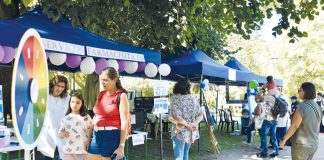
    O bom tempo que se fez sentir atraiu centenas de famílias ao Parque D. Carlos I, durante todo o dia de sábado, participando nas diversas atividades promovidas por mais de uma centena de entidades que participaram no evento. Várias associações locais, forças de segurança, IPSS, escolas, a Unidade local de Saúde do Oeste (com vários departamentos, como a oftalmologia, pediatria, saúde mental, saúde pública e cirurgia), dinamizaram palestras, workshops, showcookings, dinâmicas de rua e exposições. Os profissionais de saúde esclareceram dúvidas das famílias num fórum de pediatria, informaram sobre o uso seguro do medicamento, sobre o tempo que os jovens devem passam frente ao ecrã, mas também houve música para bebés, aulas de pilates para pais e filhos, yoga do riso e um peddy-paper na natureza. Esta edição contou também com a participação das farmácias locais que, entre outras atividades, promoveram rastreios de glicémia e tensão arterial, entre outros, que contaram com uma forte adesão por parte dos visitantes.

    A animação também foi tida em conta na sessão dirigida às famílias e comunidade

    “É um evento para promover a saúde e também, de alguma forma, sensibilizar para hábitos saudáveis”, explicou Sara Oliveira, adjunta do presidente da Câmara das Caldas, fazendo notar que os profissionais de saúde vieram à rua para estar com a comunidade. O lema deste ano é “Ser + Saudável, para Ser + Feliz” com a aposta na prevenção da doença e no melhor conhecimento da saúde, de modo a potenciá-la, através das boas práticas, explicou a responsável.
    As diversas instituições vão participar nas três sessões, que são gratuitas e abertas a toda a comunidade. Na terceira sessão, que terá lugar a 2 de outubro e dedicada aos seniores, também marcarão presença todas as IPSS do concelho. ■

  • There’s a Department for That! Municipal Power Explained

    There’s a Department for That! Municipal Power Explained

    Erik Brunar

    Did you know that while you will have to deal with the câmara to apply for a building permit, if you want to become a lottery-ticket street vendor, you can petition your local junta for a license? How did these divisions come to be and what are their respective jurisdictions?
    Municipal self-government goes back to the 12th century. After the Reconquista, the crown borrowed organizational ideas from the Muslims and granted cities royal charters setting the rules by which they ran themselves. Town councils were elected by the homens bons, the men who owned land or had high-status jobs. Reformists in the 19th century unified the disparate charters. The early 20th century saw the division of local governments into a deliberative and an executive arm. After the democratic Constitution of 1976 enshrined universal suffrage, women and illiterate citizens were finally allowed their say in electing local leaders. The details of the jurisdiction and the organization of local governments were subsequently set by laws with an aim towards decentralization and local self-rule. The lowest level is the freguesia. Several freguesias make up a município. The município de Caldas da Rainha encompasses 12 freguesias from the small settlements of A dos Francos and Vidais to the two markedly urban freguesias that divide the city of Caldas, Nossa Senhora do Pópulo, Coto e São Gregório and Santo Onofre e Serra do Bouro.
    The deliberative arm of the freguesia is the assembleia de freguesia and the executive is the junta. Likewise, power in the município is split between an assembleia municipal and a câmara. Elections for câmara, assembleia municipal, and assembleia de freguesia take place at the same time every 4 years. Seats are allocated according to proportional representation, with the leader of the winning party–or independent block–becoming the president of the junta and the câmara. The junta’s other members are elected by the assembleia de freguesia. Local authorities are allowed to own property and are entitled to the revenue its holdings generate. They collect property taxes and receive funds out of the state’s tax revenues. They are allowed to set fees for their services. Local authorities may employ civil servants who enjoy the same job protections as national government workers.
    The deliberative assemblies provide general rules for their executives and hold them to account. The assemblies have to approve the annual budget, major land purchases, personnel decisions, and agreements to outsource parts of their tasks to entities above or below them–a common way to seek efficiency by pooling resources. The assemblies get to choose a coat of arms and a flag, but they have to follow the recommendations of the national archeological society’s heraldry commission. Freguesia assemblies must hold four annual regular sessions. Municipal assemblies must hold five. Juntas meet at least once a month, and câmaras meet every week or two.
    There is some overlap in the responsibilities of freguesias and municípios. Both are charged with maintaining rural and urban infrastructure, drafting and enacting zoning rules, managing water rights, supporting culture, leisure activities and sports, engaging in social and environmental action, authorizing street parties, achieving civil protection goals, encouraging economic development, and managing cemeteries. Freguesias will focus on neighborhood-scale projects whereas municípios will organize city-wide initiatives and do long-range planning and coordination with the state. Freguesias are in charge of trash collection and of water, sewage, and waste-water treatment, but in Caldas and many other cities these utilities are coordinated by a semi-commercial arm of the município, the SMAS–Serviços Municipalizados de Aguas e Saneamento.
    In addition to their human residents, freguesias also register cats and dogs while municípios run animal control. Municípios play a role in organizing energy, transit and communications networks, in the provision of education, professional training, health services and housing, and in the designation of historical landmarks. They are expected to take action to promote gender equality and to study, administer, and publicize the local natural, cultural, and architectural heritage. In addition to their duty to issue permits for construction, renovation and demolition, municípios have the power to order the demolition of structurally unsound buildings that constitute a danger to the public and to expropriate properties in cases of overwhelming public interest. Municípios build roads, set parking rules, and maintain a police force.
    So much self-rule makes for some striking differences in the day-to-day operations from one município or freguesia to the next. For the same request, the application process can involve different sets of documents, deadlines, and fees. At least it is all in the name of local empowerment! ■


  • Active and Healthy Aging: An Interview with Miguel Sendim, Head of Nishi-no-Michi

    Flavia L. Lamattina

    Portugal is currently the fourth most aged country in the world and lags in quality-of-life indicators for those over 65. In response, the Portuguese government launched the Active and Healthy Aging Action Plan this year, marking a significant milestone for both Portugal and Europe. We spoke with Miguel Sendim, founder and current coordinator of Nishi no Michi, an association in the Oeste region that brings together professionals focused on gentle movement and promoting healthy lifestyles.

    Miguel, could you tell us how your interest in sports began? Miguel Sendim: I have 50 years of experience in martial arts, particularly Karate, Tai Chi Chuan, and Aikido, having served as Training Director and President of the national federation for Aikido. As a Lieutenant Colonel in the army and a sports coach, I was responsible for the physical training of several “generations” of military personnel and martial artists. I also have training in psychology and complementary therapies such as shiatsu. My current mission is to bring life to the gentle movement project, which is open to anyone who wants to age healthily and with quality of life through an organization called Nishi no Michi.
    What is Nishi no Michi? Nishi no Michi was born out of the desire of sports professionals in the Oeste region to combine efforts focused on promoting healthy aging, even for those who have never engaged in physical activity or who need more personalized training. The concept is to contribute to active and healthy aging through the arts and disciplines of gentle movement and the promotion of healthy lifestyles. We welcome any sports discipline, provided it aligns with this objective. Nishi no Michi has a partnership with the Portuguese Aikido Federation and is developing a collaboration with the Polytechnic Institute of Santarém, initiated with my participation in 2023 in the European DEMOLA project, an initiative rooted in Finland that promotes the connection between educational institutions, companies, and sports organizations. We aim to expand our reach by also working with healthcare professionals.

    How do you plan to achieve this? Recently, I participated in a conference on the EUPAP, the European Union Physical Activity Prescription program, which also has a counterpart in Portugal, called Prescrição de Atividade Física. Currently, there is a disconnect between healthcare professionals and sports in general (even in terms of basic maintenance), with a trend towards prescribing physical activity primarily in physiotherapy clinics and gyms. We would like to expand this and offer alternatives that provide additional benefits in more advanced aspects of aging. The idea is not to broaden the scope of so-called “adaptive sports,” but to create new forms of movement that fit the specific possibilities of each person, whether they are athletes or not, allowing them to express themselves in their way, with their excellence, bringing quality of life or, why not say, bringing their way of being in life. We already have excellent instructors promoting these activities, such as Michel Martin, who teaches PPI – Individual Prevention and Protection (a form of self-defense rooted in Aikido), Patrick and Christine Briel, who teach Tai Chi Chuan, teacher Cíntia Soci, also with Tai Chi, circus arts teacher Basile Pujebet, Joana Santos, who teaches Yoga, and Lurdes Salgado, who developed “Move to Connect” (an intriguing discipline involving movement and body psychotherapy). Our groups are diverse and engaging, bringing together people of all ages and backgrounds, including those who have never participated in any physical activity before. This creates a welcoming environment where everyone can discover the joys of staying active. Beyond the physical benefits, it’s also a great opportunity to meet new people, form friendships, and enjoy the sense of community that comes with being part of a group dedicated to health and well-being.

    For those interested in practicing gentle movement, where can they go? Currently, the project is locally tied to the Sociedade Columbófila Caldense in Caldas da Rainha, where we offer “No Fall Aikido” classes, and to the Rainha Dona Leonor pavilion, where Michel Martin teaches PPI, both at very low cost. We also hold activities in Parque D. Carlos I, such as Tai Chi Chuan classes on Wednesday and Sunday mornings, free of charge. Additionally, we offer activities in the localities of Gaeiras and A-dos-Negros. This year, we participated in the Lagoa Festival in Foz do Arelho and held events in the gardens of the Arts Center (as part of Falo’Mexer), with activities planned for August 31st. We are planning a special movement and sound event for next year, with the participation of the Opus 28 string quartet. We share all our activities on our Facebook page (just search for “Nishi no Michi”), where those interested can follow updates and join our events.

    Lastly, could you tell us about the activities planned for this month? In September, we will participate in the European Week of Sport, and we also have an event on September 28th at the Arts Center here in Caldas. This day will be dedicated not only to sports activities but also to workshops for all ages. The idea of this event is to allow people to try new activities and become interested in them, knowing that the gentle movement initiative is for everyone, regardless of age. I invite everyone to come and participate.■

  • The Evolution of Portuguese Health Remedies: Of Royal Influence and Traditional Wisdom

    Charity Kuahiwinui

    Affectionately known as encosta do sol, our local landscape is dotted with vibrant towns where tradition and history are deeply interwoven into the fabric of daily life. One such tradition that has withstood the test of time is the use of “mezinhas” or “remédios caseiros” — natural home remedies. These remedies, often passed down through generations have provided comfort and relief long before the advent of modern medicine and continue to do so today.

    Thermal Hot Springs
    The story of modern medicine in Portugal is one of royal intervention and the ongoing appreciation for traditional wisdom. A huge part of that history was written in Caldas da Rainha when Queen Dona Leonor passed through the area on her way to Batalha in 1484. Legend goes that she witnessed locals bathing in stinky, sulfuric water. When she inquired as to what they were doing, they let her know of the water’s healing properties. She tested it herself and found relief for some of her own ailments. The queen was so impressed with the outcome that she sold some of her personal land and property to raise funds to found a Thermal Hospital located in the area of the hot springs. This opened to the public just a short year later and was completely finished in just a few years. It has been in continuous operation as a center of healing since then!
    Indeed, Queen D. Leonor played a significant and long-lasting role in the health and welfare of the Portuguese people. In addition to our beloved hospital, she helped establish the “misericórdia” brotherhoods with a focus on helping the poor and sick with medical treatments, housing, clothing, food, funeral assistance, and other functions of daily living. These associations continue to play a large role in local communities, ensuring equality in health outcomes throughout the country.

    The Enduring Legacy of Natural Remedies
    Throughout the years, even after the rise of modern medicine in the country, natural remedies known as “mezinhas” have remained a steadfast part of Portuguese culture. They reflect a universal approach to healthcare that relies on readily available natural resources.
    One of the most beloved remedies is “cházinho de limão com mel” or lemon tea with honey. If you mention having a cold to an elderly Portuguese neighbor or vizinha, she’s likely to recommend “muito cházinho de limão,” which translates directly to “plenty of lemon tea.”
    When put into action, this simple yet potent remedy involves placing freshly cut lemon peels in a cup, covering them with hot water, and adding a teaspoon of honey. This soothing treatment is generally effective for relieving early cold symptoms. Variations include adding lemon juice, a cinnamon stick, and slices of freshly-cut ginger. Ginger by itself is a very effective remedy for upset stomachs and has anti-nausea properties.
    When it comes to overall nourishment and comfort during illness, “gemada” is a cherished remedy. This tonic involves beating an egg yolk with sugar or honey until frothy. Add a bit of port and cinnamon powder. While not a medicine per se, “gemada” serves as a comforting and strengthening boost for those feeling under the weather.
    For those suffering from a persistent cough, “rebuçados Dr. Bayard” seem to be the go-to solution. These iconic cough drops, made from a blend of medicinal herbs, have a rich history dating back to World War II and many locals maintain their effectiveness.
    In colder months, warming remedies like “aguardente” and spiced wine are popular. Aguardente’s remedy involves mixing two tablespoons of sugar with the spirit, setting it on fire, and drinking the warm liquid once the flame goes out. This potent potion is believed to help one sleep off the symptoms of a cold. Similarly, a mixture of red wine, sugar, lemon peel, and a cinnamon stick is boiled until the alcohol evaporates, creating a syrup-like consistency that is both warming and soothing.
    The rich history of Portuguese health remedies is a testament to the enduring power of tradition and natural wisdom. From the regal initiatives of Queen D. Leonor to the cherished “mezinhas” passed down through generations, Portugal’s approach to healthcare is a blend of modern advancements and timeless practices. Whether it’s the comforting warmth of “cházinho de limão” or the invigorating tonic of “gemada,” these remedies offer a glimpse into the heart of Portuguese culture — one that cherishes simplicity, natural resources, and the enduring bond of community and tradition.

    Sources:
    https://asrjetsjournal.org/index.php/American_Scientific_Journal/article/view/3805
    https://www.ncbi.nlm.nih.gov/pmc/articles/PMC3609166/
    https://www.ncbi.nlm.nih.gov/pmc/articles/PMC7689443/
    https://observador-pt.translate.goog/2016/01/10/cinco-remedios-caseiros-fazem-maravilhas/?_x_tr_sl=pt&_x_tr_tl=en&_x_tr_hl=en&_x_tr_pto=sc ■


  • Modular Prefabricated Homes Gain Popularity and Open New Financing Opportunities in Portugal

    Modular Prefabricated Homes Gain Popularity and Open New Financing Opportunities in Portugal

    Flavia L. Lamattina

    To address the housing market crisis and soaring prices, modular homes have begun to carve out a significant space in Portugal. The concept of non-traditional construction is still not very clear to the public, but it attracts attention due to its cost-effectiveness and efficiency.
    Historically viewed with some caution, modular homes are now valued for the quality and technology employed in their manufacture. Unlike traditional on-site building, these homes are produced in certified factories, divided into modules that are later assembled on the final site. This method gives them a sturdy and secure structure, despite preconceived notions that they might be less solid than conventional constructions. The customization options range from small units (T0) to larger residences (T5), with one or two floors, including possibilities for fixed or transportable homes. Additionally, regarding quality, these modular homes are as durable as traditionally constructed houses, typically lasting 50 to 70 years.
    Among the main advantages are the reduced cost and the speed of construction, with some companies capable of delivering a ready home in up to 90 days. Also, once built, new areas can be added or removed. The owner can start with a T1 (one-bedroom) and gradually expand to a T3 (three-bedroom). The disadvantages include the transport costs of factory parts to the site and the limitation in customizing the projects, coupled with the usual bureaucracy involved in obtaining financing. This type of construction requires prior land preparation, and some models need a ready foundation and connections to services such as water, sewage, and electricity, generally at the owner’s expense. Two more things to consider: once the project is approved, it cannot be changed without risking additional costs for minor modifications, and the homes are generally paid for upfront, highlighting the importance of choosing a reputable, certified company to ensure your investment is worthwhile.
    Financing is an important aspect here, as some institutions still do not have a program for this type of property. The local bank Caixa Geral de Depósitos, for instance, already offers a housing loan line for this purpose. Other banks, like Santander in partnership with Discover Casa, are also beginning to adapt their offers to include prefabricated homes, with credits that can cover amounts between 50,000 to 200,000 euros, offering loans that cover up to 90% of the total cost. If the owner requires 100% financing, some manufacturers offer this possibility. However, consumers must always remain vigilant with these offers, ensuring they are always associated with a reliable financial entity with a good reputation in the market.
    With reduced interest charges on loans and advances in quality, prefabricated houses present themselves as a viable and increasingly popular option in Portugal. For potential buyers, it is essential to research and consult on appropriate financing conditions and thoroughly understand both the limitations and benefits of these modular homes before making a purchase decision. Key considerations include the choice of manufacturer (consider reputation, proximity to the land to avoid extra transport costs — shop around and check all materials and processes used to build your home), a detailed project (avoiding unnecessary costs), and legal issues — one must present an architectural project to the City Council, obtain a construction permit and habitation license, and register it at the Property Registry Office (Conservatória do Registo Predial), considering including these expenses in the project budget and leaving the legal responsibilities to the builder. Maintenance of the property, especially if the house is made of wood, must also be considered. Another important aspect is the contracting of insurance, which is always somewhat pricier for this type of housing.
    The options for prefabricated homes in Portugal continue to grow, reflecting a trend that should be closely watched by those interested in the real estate sector, especially the luxury sector when discussing eco-homes and recycled material homes — definitely a trend to follow. ■


  • Understanding healthcare in Portugal – Part 2

    Understanding healthcare in Portugal – Part 2

    Crystal Murno

    In the previous article we shared information about the differences between public and private healthcare in Portugal. Many residents take advantage of both systems to optimize their health in a way that is cost effective.

    How to utilize both public and private healthcare
    In the event of an emergency, it is important to note the emergency number is 112 and when you call, they will take you to the nearest public hospital. Any time you have an emergency, such as symptoms of a heart attack or stroke, it is always best to seek emergency services at a public hospital because they have around the clock access to resources which is not always the case for a private hospital. If you go to a private establishment and need to be hospitalized or need an emergency surgery, they may transfer you to a public hospital.
    For this reason, it is advised to get into the public system as soon as you have your residency. If you take any daily medications or require regular lab work for a chronic condition, you should visit the local Centro de Saúde to apply for your Número de Utente and to schedule an appointment with a general physician. When you go to your appointment, just ask for whatever it is that you need. They will order whatever exams and medications that you need if you explain your history and the reasons why.
    There is an application that is very helpful to have on your mobile phone, it is called SNS24. This is helpful to keep your health records in one place, including your e-scripts from the public physician. The e-script program in Portugal is a very effective public program and even if you see a private physician, many times they work in the public sector as well and can send your script through the public e-script system so your medication will be low- or no-cost to you.
    Private hospitals are a great option for non-urgent care, like a urinary tract infection or a lingering cough that may need medication and you cannot wait for an appointment at the Centro de Saúde. Private specialists for elective surgeries are also an effective way to use the private system. You may have back pain from a degenerative disc disease or need a hip replacement and working with a private specialist may help to make the process an easier and quicker one than if you were to go through the public system.
    CUF, Luz, Lusiadas, and TrofaSaude are large hospital systems in Portugal. There are many smaller private clinics and diagnostic centers in and around Caldas Da Rainha, such as Clinimed and Germano de Sousa. However, the most central private hospital in Caldas Da Rainha is Montepio Rainha Dona Leonor.
    One valuable resource for foreigners who may be experiencing mild symptoms are pharmacists. By going to the local farmácia, speaking to a pharmacist about your symptoms, and taking the medication they recommend you may alleviate the need for a medical consultation. Just remember that if your symptoms do not improve or worsen, it is important to be seen by a physician. Pharmacies take turns remaining open for 24 hours so you are able to access a pharmacist at any time. www.farmaciasdeservico.info is the website where you can find which local pharmacy is open after hours.
    Lastly, if the thought of trying to navigate both systems is a daunting task, there are medical concierge services who can recommend physicians and facilities for you, make appointments for you, and even attend appointments with you. Hopefully, with the information in this article, you will feel like you can make informed decisions about your medical needs. ■

  • A caminhada para um envelhecimento saudável

    A caminhada para um envelhecimento saudável

    Vítor Ilharco
    Personal Trainer

    O envelhecimento populacional é uma realidade crescente em Portugal. Segundo dados do Instituto Nacional de Estatística (INE), em 2021, as pessoas com 65 ou mais anos representavam 23,4% da população residente em Portugal, incluindo estrangeiros. Este é um cenário com tendência crescente, visto que o INE aponta para que em 2080 haja 36,8% da população com mais de 65 anos. Se, por um lado, o aumento da esperança média de vida é, obviamente, positivo, por outro, é necessário repensar os cuidados a uma população cada vez mais idosa, garantindo-lhe qualidade de vida e autonomia.
    Atualmente, sabe-se que há uma forte relação entre exercício e qualidade de vida na população sénior. A Organização Mundial da Saúde (OMS) recomenda que os idosos pratiquem 150 a 300 minutos de atividade física aeróbia de intensidade moderada por semana, ou 75 a 150 minutos de intensidade vigorosa, ou uma combinação equivalente de ambas. Adicionalmente, é aconselhável realizar atividades de fortalecimento muscular em dois ou mais dias por semana, de intensidade moderada ou superior. É também crucial que pratiquem atividades diversificadas que promovam o equilíbrio, prevenindo assim o risco de quedas, que é um dos principais limitadores da autonomia nesta faixa etária.
    Estas recomendações são baseadas em forte evidência científica. A prática regular de exercício ajuda a prevenir e controlar doenças crónicas, como hipertensão, diabetes tipo 2 e doenças cardiovasculares. Além disso, melhora a saúde mental, reduzindo sintomas de depressão e ansiedade, e promove a saúde cognitiva, retardando o declínio cognitivo e diminuindo o risco de demências, como a doença de Alzheimer. Atividades em grupo, como caminhadas, aulas de dança ou ginástica, oferecem oportunidades de socialização, reduzindo o isolamento social.
    Em Portugal, a crescente longevidade da população traz desafios significativos para o sistema de saúde, mas também oportunidades para a implementação de políticas públicas que incentivem um estilo de vida ativo entre os idosos. A criação de espaços públicos adequados, programas comunitários de exercícios e campanhas de sensibilização são essenciais para a promoção da prática regular de atividade física entre a população sénior. Todos desejamos chegar à velhice com saúde, autonomia e qualidade de vida. Os hábitos de vida saudável, onde a atividade física se insere, são cruciais para alcançar esses objetivos. ■

  • Understanding healthcare in Portugal 

    Understanding healthcare in Portugal 

    Crystal Murno
    Questions and concerns about healthcare are common for people moving to live in Portugal. Having ten years of experience working as a professional registered nurse and nurse educator licensed in the State of New York, I too had many questions when I arrived here in Caldas Da Rainha in January of 2023. Since that time, I have had the opportunity to learn about the healthcare system here from both personal experience and from my own research. This article is the first in a series of articles about healthcare in Portugal. In this article, I hope to shed some light on the differences between the public healthcare system and the private health care system.

    Public healthcare
    Portugal provides comprehensive healthcare services to legal residents in Portugal through the national health service (servíço nacional de saúde or SNS). These services are funded through taxes and offer no-fee or low-fee non-emergency medical care. There is a small fee for emergency care that is sought without referral from a public physician. Registration at the local health center (Centro de Saúde) is required to obtain a health number (Número de Utente) which is necessary for accessing public healthcare services. To register, you will need your passport, proof of your tax identification number (número de identificação fiscal or NIF), and your Portuguese residence permit. Regulations just changed this year that also require you to have a social security number (NISS) to obtain your Número de Utente and to be allocated a family doctor. If you have not yet had your appointment for residency in Portugal, you are able to apply for a provisionary Número de Utente.
    The e-script program in Portugal is a very effective public program. There is an application that is very helpful to have on your mobile phone, it is called SNS24. This is helpful to keep your health records in one place, including your e-scripts from the public physician.
    The public system covers primary care doctor visits, maternity care and birth, pediatric care, some dental treatments, mental wellness, chronic disease management, hospitalizations, prescriptions, and emergency services. The challenges within the public system are a lack of primary care physicians which result in longer wait times for general health appointments and an overcrowded hospital waiting room bogged down with patients who have non-emergent health issues. For this reason, many foreigners and Portuguese nationals are opting for private insurance to supplement their healthcare needs.

    Private healthcare
    The private sector in Portugal offers an alternative to the public system, characterized by reduced waiting times and a broad spectrum of medical specialists and services. Private hospitals, clinics, and diagnostic facilities offer modern infrastructure and a level of comfort that many people moving to Portugal from countries with well developed, modern healthcare systems may be accustomed to. To access private healthcare, immigrants typically need to pay out of pocket or purchase private health insurance. There are also health plans that are like a medical discount plan that usually will offer lower fees for medical visits, exams, and procedures for a monthly fee. This is not health insurance but can decrease the out-of-pocket expenses for those who do not have health insurance.
    When purchasing health insurance, it is important to consider a few of the areas that may leave you surprised if you are not prepared. For example, you may need to pay up front at the private facility and then be reimbursed after submitting the receipt (fatura) to your health insurance company. You may also have a surprise if they do not reimburse you because they may not always give you comprehensive coverage. Many health insurance plans do not cover pre-existing conditions. Lastly, when you are arranging your health insurance, read the details of the cover carefully and compare different providers. Some will have a premium for people over 60 or 70, and some may not offer cover at all for older applicants. Even though you have been a loyal customer for many years, you may find that your existing provider will no longer offer coverage and you will need to rely on the public healthcare system and possibly utilize a discount health plan.
    The next article will share information about how to use both the public and private systems to optimize your healthcare and more information about specific public and private healthcare facilities in and around Caldas Da Rainha and the services they provide.

    Acknowledgements: Lucy Gray (Feature editor), Photo by Karolina Grabowska on Pexels ■

  • Effective strategies to minimize mold

    Effective strategies to minimize mold

    Charity Kuahiwinui

    Upon relocating to Portugal, new residents inevitably encounter a common and unifying challenge: managing moisture levels within their homes. Over time, mold steadily creeps in to become unwelcome house guests, thriving in environments where moisture persists and ventilation is lacking. Understanding this fundamental principle is crucial in developing effective strategies for combating problems that result from excess moisture.
    The question is what tips moisture levels from being pleasant to becoming problematic? The ideal amount of indoor humidity falls into a range of 40 – 60%. (source: WorldData.Info 2024) Over 60% fosters the growth of mold which can lead to allergy and respiratory problems. Under 40% humidity can cause discomfort, itchy skin, and irritated nasal passages.

    Practical tips for moisture management
    Avoid plastic storage: mold thrives in enclosed, moist environments. Instead of storing items in plastic, opt for breathable containers or open shelving.
    Ventilated wardrobes: arrange wardrobes to facilitate air circulation, preventing moisture buildup. Don’t fill them to the brim. Air out storage spaces daily when the weather allows.
    Utilize moisture absorbers: consider using passive dehumidifiers in closed spaces. Place containers of salt or specialized moisture-absorbing products in closets, dresser drawers, and storage bins to combat excess humidity.
    Opt for anti-mold paint: apply anti-mold paint on interior walls to prevent mold growth, especially in high-humidity areas like bathrooms and kitchens.
    Promote natural ventilation: even during winter, opening windows for 15 – 30 minutes every day allows fresh air to circulate, helping to reduce humidity levels indoors.
    Good ventilation is key to minimizing spore growth. The habit of sealing doors and windows tightly during colder seasons only elevates indoor humidity levels, leading to condensation and mold growth.

    Technological solutions for effective moisture control
    Beyond the practical options for controlling mold, there are several effective technological approaches that can be taken to help you win the battle against moisture.

    Dehumidifiers: invest in dehumidifiers to extract excess moisture from the air, particularly in areas prone to dampness. In our home, we run one in each bedroom, the bathroom, and the common area and during most of the year. In winters, we typically empty at least one liter of water from each device every single day. Of course, we try to use the water extracted from the air for plants and other household needs.
    Air Conditioning with dehumidifier setting: modern HVAC systems equipped with dehumidifier settings offer comprehensive moisture control while providing heating or cooling as needed. Minimizing the amount of moisture in the air creates a feeling of warmth even without raising the temperature.
    Bathroom ventilation systems: add a fan that exhausts outside your home in the bathroom to minimize moisture buildup after baths and showers.
    Electric wardrobe heaters: install ceramic heaters in closets to maintain optimal temperature and prevent moisture buildup on clothing and stored items. These devices require very little energy but can make a big difference for fabrics.
    Double-glazed windows: upgrade to double-glazed windows to enhance insulation and reduce condensation on glass surfaces.
    Underfloor heating: implement underfloor, radiant heating systems to regulate indoor temperatures and minimize moisture accumulation in flooring materials.

    Remediation techniques for mold-affected surfaces
    When mold does appear, prompt action is essential to prevent further spread.

    Treatment methods include:
    Mold removal spray: popular mold elimination sprays can be found at local hardware stores that reduce the amount of visible mold and prevent it from returning.
    Vodka or alcohol sprays: spraying affected surfaces with alcohol-based solutions effectively kills mold spores without the risk of spreading.
    Vinegar water: a solution of vinegar and water serves as a natural disinfectant, effectively eliminating mold on various surfaces.
    Bleach: be careful when using bleach as it may inadvertently spread spores.
    By understanding the root causes of mold growth and implementing practical solutions, you can create a healthier, more comfortable living environment.

    References: WorldData.Info (2024) available at https://www.worlddata.info/europe/portugal/climate-lisbon. Accessed 9th April 2024. ■

    Acknowledgements: Eduardo Roisman (Artist) Lucy Grey (Feature editor)


  • Novos desafios e usos que se põem à habitação

    Novos desafios e usos que se põem à habitação

    O aumento da procura em relação à oferta de casas, a subida dos preços das rendas e também dos juros nos empréstimos à habitação, juntamente com novas formas de trabalho, estão a levar a uma alteração de paradigma.
    No Oeste o preço das casas continua a aumentar e a um ritmo superior ao da média nacional, sinal de que a região continua a ter uma grande procura, sobretudo externa. Nos dados apresentados nesta edição da revista Casa & Decoração vemos que o preço mediano do metro quadrado na aquisição de imóveis cresceu, na região, 13,2% durante o ano de 2023 e que foram menos os fogos licenciados relativamente a 2022. Em crescimento tem estado a procura, e construção, de casas em madeira, uma alternativa mais sustentável, que apresenta vantagens sobretudo ao nível do isolamento térmico e acústico. Outra alternativa é a alteração de uso, transformando espaços comerciais em habitação, ou mesmo garagens em ateliers de design, como acontece no coração das Caldas. Há também o bom exemplo de transformação de um antigo bar e discoteca em atelier de cerâmica.
    No que toca à decoração mostramos como uma empresa obidense aproveitou uma antiga fábrica e, durante duas semanas, mostra as tendências mais internacionais nos segmentos mais exclusivos, levantamos a ponta do véu sobre o Salone del Mobile, em Milão, e dicas para fazer um jardim em sua casa. Convidamo-lo a entrar.

  • Storms are brewing! Climate change along the Silver Coast

    Storms are brewing! Climate change along the Silver Coast

    John O’Brien

    Like all nations, Portugal is currently being buffeted by the impacts of climate change. Those impacts vary between its regions, but universally they have detrimental consequences for the environment and human livelihoods.
    The primary impacts on Portugal’s climate come from the west, influenced by how changes to Atlantic Ocean currents will disrupt seasonal weather patterns. Squeezed between the western edge of the continent and the Mediterranean means that Portugal could suffer disproportional exposure to climate change, north to south and even west to east!
    Already in 2024, the EU’s climate change service C3S reported global temperatures had exceeded 1.5 °C above pre-industrial levels (i.e., before fossil fuels were being burned extensively), widely viewed as a critical threshold for irreversible change. Climate scientists frequently discuss so-called “tipping points”, i.e., scenarios where an environment can no longer withstand climate change and that result in catastrophic deterioration. When, or even if, the Silver Coast will experience such a tipping point is open to heated debate, but it is undeniable that the region will suffer climate-associated changes.

    In a vice-like grip of sea and fire
    The ocean clearly represents the greatest menace to the Silver Coast under various climate change scenarios. Principle among these will be erosion – already a considerable concern for many living along the coast. Not only are Atlantic storms becoming more frequent, they also appear to be strengthening, so wave surges are consuming ever more prime real estate. Given how much we adore sea views and building on shorelines, we still seem determined to challenge the Atlantic Ocean to a conflict we cannot hope to win. Even with very moderate sea-level rises under the most benign climate change scenarios, the topography of the Silver coastline is likely to shift, potentially flooding some of our region’s most beautiful locations.
    Take Peniche for instance. Formerly an island, increased sea levels and consequently higher tides would again separate it from the mainland, perhaps requiring its citizens to begin researching the inflatable dinghy market! Similarly, popular São Martinho could see its iconic shell-shaped bay threaten the foundations of its trendy apartment blocks fringing the shoreline. And for Nazaré that is so reliant on the huge waves that attract scores of surfers from around the world, stronger and more frequent storms could be a blessing or a curse.
    Shifting attention inland, altered weather patterns could dramatically disrupt the Silver Coast’s crucial agricultural production. Alcobaça is at the heart of the Portuguese orchard, with special EU recognition for its apples. It is here that a tipping point could become critical, with short-term gains from increased temperatures being rapidly eroded by weather conditions no longer suitable for fruit growth. Moreover, longer and more intensive droughts, already a feature of Portugal’s climate evolution, could endanger water supplies to farms, homes and industry, greatly limiting the Silver Coast’s productivity.
    Where land has not been given over to fruit and vegetable production in the Silver Coast, it has been forested, typically with pine and non-native fire-prone eucalyptus. Anybody who has lived in this area over recent summers will be aware of the increased frequency of forest fire events, often raging unimpeded through the extensive plantations. Not only do forest fires endanger lives and livelihoods, they also exacerbate the climate crisis by releasing even more carbon dioxide and polluting particles into the air as smoke.
    There are also potential direct negative impacts on human health from climate change, including heat-associated mortality that will disproportionately affect the very young and old, increased pollution contributing to respiratory ailments, and disease epidemics such as malaria and dengue fever due to climatic conditions being more favorable for their mosquito hosts.

    Riding the wave of climate disruption
    How is Portugal dealing with this existential crisis? With EU guidance, the Portuguese government is assessing climate change impacts and adaptation measures under the on-going National Roadmap for Adaptation 2100 (see ClimateADAPT), examining how regions can tackle and even take advantage of the changes coming down the line. Strategies range from physical interventions, such as reinforcing the coastal dune systems so critical to buffering against storm impacts, to agricultural diversification, encouraging landowners to consider new plant types more resistant to climate impacts.
    Can the Silver Coast benefit from shifts in climate patterns? Perhaps, if its communities are sufficiently adaptable to the problems they can bring. Maybe tourists will look northward away from the sweltering heat of the Algarve, as long as the Silver Coast’s own beautiful beaches survive the gnawing ocean. And rather than apples and pears, could Alcobaça become famed for its citrus and mangoes? However, it is virtually impossible to foresee those outcomes, since they are reliant on human behavior, which is even harder to predict than climate.

    Reference:
    Portuguese section of the Climate ADAPT website:
    https://climate-adapt.eea.europa.eu/en/countries-regions/countries/portugal

    Acknowledgment: Lucy Gray (Feature editor) ■


  • Grande Regata no Lago do Parque I 25 maio – 2024

    GRANDE REGATA no Lago do Parque D. Carlos I

    25 de Maio

    A Gazeta das Caldas volta a organizar, em parceria com o Museu do Hospital e das Caldas, com o Município de Caldas da Rainha e com a União de Freguesias Nossa Senhora do Pópulo, Coto e S. Gregório, a Grande Regata no Lago do Parque D. Carlos I a 25 de Maio. A já icónica prova de remo anual no Lago do Parque D. Carlos I, à semelhança das grandes provas que animavam o Parque nos finais do século XIX, contará com a inscrição de equipas de 6 elementos que competirão por um lugar na final.

    Paralelamente estarão associados a esta iniciativa diversos parceiros que contribuirão para a animação envolvente do local, nomeadamente com animação infantil e atividades desportivas promovidas por diversas associações desportivas locais, ginásios, desporto escolar, etc, que serão desenvolvidas no Parque das Bicicletas entre as 10h00 e as 16h00. Venda de comida e bebida, e animação musical serão também contempladas durante todo o dia.

    Na edição deste ano estarão ainda presentes quinze associações de solidariedade social e ambiental. Esta Rota do Voluntariado Local tem como objetivo dar a conhecer e sensibilizar a população para a missão de cada associação, bem como demonstrar as necessidades e os objetivos de cariz social, animal ou ambiental de cada uma.

    Como NOVIDADE, na edição desde ano, surge a PROVA XARLIE, uma prova de jogos recreativos também para participar em equipas de 6 elementos (maiores de 18 anos), que decorrerá entre as eliminatórias e a final da regata. Será uma atividade também de convívio, patrocinada por uma marca de bebidas, em que o objetivo será os participantes cumprirem determinado percurso/jogo, e na passagem no ponto de partida beberem uma pequena cerveja/sidra (marca Xarlie).

    Os prémios de melhor indumentária, onde a criatividade e diversão também é premiada não faltarão em ambas as provas.

    A Gazeta das Caldas propõe-se ainda, a estender o evento com música ao vivo, no parque das bicicletas do Parque D. Carlos I, até às 00h00, com a atuação da banda O’Demora.

    Será um dia de animação no Parque D. Carlos I em que se pode divertir em família, entre amigos, com colegas de trabalho.

    As inscrições para ambas as provas são limitadas e devem ser feitas através do link https://forms.gle/CVrUQtVUp7fGE9a17 ou para o e-mail eventos@gazetadascaldas.pt. Terão um custo simbólico de 6€ (1 € por participante) que reverterá; à escolha, para uma das 15 associações presentes da Rota do Voluntariado Local.


    PROGRAMA (em atualização)

    Parque das Bicicletas

    TODO O DIA- Insufláveis infantis da Supimpa Kids

    TODO O DIA- Foodtrucks de Comida e Bebida

    TODO O DIA- Rota do Voluntariado Local

    DURANTE A MANHÃ- Jogos de Xadrez com a Associação Peão Cavalgante

    09H15- Aula de Bodybalance dinamizada pelo ginásio Balance

    10H30- Aula de Zumba dinamizada pelos Pimpões

    11H15- Aula de Pilates dinamizada pelos Pimpões

    12H00- Aula de Condição Física para pais e filhos dinamizada pela Escola Vocacional de Dança de Caldas da Rainha

    21H00- 24H00- Musica ao vivo com a Banda O’Demora


    Junto à Casa dos Barcos

    11H00- Aula de kayaks no lago dinamizado pelo desporto escolar do Agrupamento de Escolas Raul Proença

    16H00- Eliminatórias da Grande Regata no lago do parque

    20H30- Grande Final da Regata no lago do parque


    Junto ao Coreto

    TODO O DIA- Atividade promovida pela NDA Vidais Futsal

    10H00- Treino aberto de futebol dos petizes dinamizada pela ARECCO


    Em frente ao Museu José Malhoa

    10H30- 12H00- Treino aberto de rugby promovido pelo Caldas Rugby Clube.

    19H00- Prova Xarlie em frente ao Museu José Malhoa

  • Oeste International Community Volunteers: True integration with equal partnership: giving is a treasure of life

    By: Joana Castanheira, Lara Silva, Carta Jesus, Antónia Pinto and Sarah Monares

    The Oeste International Community Volunteers, also known as OICV, supports the international community from different nationalities settling down in Portugal. This association also promotes integration into the local community by working with the local Government, organizations, and community groups. One of the ways the OICV brings people together is through events and fundraising to support local programs that give back to those in need in our community. We are excited to tell you more about our upcoming event that combats food insecurity and reaches those who need food support.

    Come Join Us For A Great Way to Give Back
    “Aqua Vitea”  is a fundraising dinner/dance and talent show that will take place on the 11th of May at “Associação Social e Cultural Paradense” in Casais dos Morgados (near Salir do Porto) from 7:00 pm to 11:00 pm, doors open at 6.30pm. This event is a collaboration between Oeste International Community Volunteers (OICV) and the Thirst Project Portugal team (TPP) from Raul Proença Secondary School and, together, they want to make a difference. Half of the money raised at the event will be given to Refood and the other half raised will go to the Thirst Project Portugal (TPP). These teams want to help not only local organizations but also the population of Eswatini Kingdom in Southern Africa.

    About The Thirst Project Portugal
    The Thirst Project Portugal [TPP] is a non-profit organization with the motto “Giving water is giving life”. By building teams in schools and universities all over the country, this project raises money to build water holes in Africa’s poorest countries where people do not have access to drinking water, and they have to walk for several hours per day loaded with heavy buckets to find a water source. The TPP wants everyone to have the right to clean and easily accessible water and it is currently working to make that possible in the Eswatini Kingdom. At the Raul Proença School, a few students got together, and a team was created with the principle of helping people in need.

    About Refood
    Refood is an institution in Caldas da Rainha that gives food to families in need in the regional area. Refood 4 Good is an association with the status of an IPSS (Private Institution of Social Solidarity) whose mission is to eliminate food waste and hunger by involving the entire community in a common cause. The Caldas da Rainha nucleus was inaugurated in 2016 and has consistently grown, reaching more and more beneficiaries. The volunteers of this nucleus operate from Monday to Sunday and are involved in tasks related to routes and shifts. The routes primarily involve collecting surplus food and products nearing their expiration date from canteens, restaurants, and supermarkets. On weekdays, five routes are carried out, while on weekends, there are two on Saturdays and three on Sundays. The tasks during shifts include dividing the surplus based on each family’s needs and distributing it to the beneficiaries. Additionally, volunteers handle the organization and cleanliness of the operations center. On weekdays, there are four shifts, and on weekends, one shift operates.
    Each beneficiary visits the operations center to collect meals, on average, twice a week. Since they work with surplus food, the number of meals they take varies depending on the day and month. Refood Caldas da Rainha collaborates with various local partners and the general community. In addition to being food sources, these partners ensure the continuity of operations by financing ongoing expenses, consumables, and the maintenance of the nucleus’s equipment and two vans. In the last quarter of 2023, Refood Caldas da Rainha donated 20,530 complete meals, preventing 26,622 kg of food waste. The nucleus supports 152 beneficiaries, distributed among 55 families. Its functioning relies on 163 volunteers, 19 food sources, and 12 partners.

    Reserve Your Spot At An Event to Help Others
    Come and enjoy yourself at “Aqua Vitae” where you will delight in the 3-course Chinese Cuisine meal accompanied by a Talent Show. The Performance will include all kinds of talent from music and dance to theatre and poetry. All of the performances are from local young people. To book your tickets (€25 per person), please contact the TPP team by email (thirstproject.raulproenca@gmail.com) or Instagram (@raulproencathirstprojectpt). You can also contact the volunteers from OICV, if you are interested in finding out more about their work or want to volunteer, through OICV email (oicv.email@gmail.com) or Facebook page.

    Thank you for your support! We look forward to seeing you there!
    Acknowledgement: Lucy Gray (Feature editor) ■


  • Shop local: The markets of Caldas da Rainha and beyond

    Sarah Monares

    Markets are a big part of Portugal’s history and continue today as a popular and effective way to shop with local farmers and vendors. The vast variety of markets to choose from is one of my favorite perks of living on the Silver Coast. I appreciate the access to the freshest fruits and vegetables, as well as handmade items, antiques, and other goods. Caldas da Rainha and cities and villages all over Portugal offer markets that take place regularly, as well as pop-up markets that are based around holiday events or festas. No matter the time of year, it’s easy to find a market close by.

    The importance of shopping at local markets
    Through my conversations with Portuguese locals who have seen the markets change over time, they have expressed the impact that the arrival of grocery stores and big chain
    supermarkets has had on the survival of markets and their vendors. For many people, it can feel easier to run down to the supermarkets whenever you want, rather than wait for the hours the market is open. Shopping at markets not only supports local farmers and members of the community but helps to carry on the history and survival of the markets we have come to value so much. Shopping small and local is an important way to continually give back to the communities we live in.

    Top market tips
    My most commonly shopped market is the daily market in Caldas. The praça da fruta is an example of a market bustling each morning with vendors selling fruits, vegetables, flowers, and local crafts. It stands as a symbol of the city’s enduring community spirit and has been operating since the end of the 15th century​. Markets like this will only continue if we support them by using them regularly. Market shopping can be fun and effective, here are some of my biggest tips for your next visit to the market.

    1. Bring a reusable bag: market vendors will usually provide a plastic bag for produce but it is more sustainable and convenient to have a good, sturdy reusable bag to carry all your items in. Many people use the bags on wheels which will definitely save the body from having tired shoulders.
    2. Establish relationships with your favorite vendors: now that I am a regular at the fruit market, I am beginning to create cordial relationships with the owners of the stalls I frequent. It is a great feeling to be happy to see each other each visit and it is also a great place to practice my progress with learning Portuguese.
    3. Try something new each time you go: coming from Colorado in the United States, the climate here is very different than what I am used to. There are many fruits and vegetables I have never seen before. Rather than sticking with what is familiar, I believe it is important to be adventurous and try something new. Each market visit is unique with the savoring of local flavors.
    4. Plan for rain: it goes without saying that at different times of the year in Portugal, you always plan for rain. The expectation is that even if rain is present, the show must go on. I have visited the Praça da fruita many times in a downpour. The vendors are out there in the rain so we can be too. Put on your rain gear and make it an adventure.
    5. Write a shopping list for markets and supermarkets: it helps me to better shop local markets when I’ve thought ahead about what I can prioritize buying at a local market.

    Caldas da Rainha markets
    Praça da fruta: open daily from 8:00 am – 1:00 pm
    Monday Market: every Monday near Campo de Padel offering a wide variety of items from home goods to clothing and produce.
    Antique and craft market: this occurs on the 2nd Sunday of each month at Dom Carlos Park, starting at 10:00​ am.
    Monthly antique market: this is held on the 3rd Saturday of every month from May to November, near Leroy Merlin.
    Mercado do peixe: the fish market is open Monday through Saturday from 7:00 am – 2:00 pm.

    Silver Coast markets
    Santana market: Mercado Santana is in Rio Maior, Portugal. This is a popular and large open-air flea market open Sundays from 8:00 am – 1:00 pm weekly.
    São Martino de Porto: produce market open Tuesday to Sunday from 8:00 am – 1:00 pm.
    Obidos: Antique market that takes place on the 1st Sunday of every month.
    Foz Do Arelho: antique market that takes place on the 3rd Sunday of every month.
    Peniche: produce market open Tuesday to Sunday from 7:00 am – 1:00 pm .
    Lourinha: produce market is open Monday to Saturday from 7:30 am to 1:00 pm.

    This is not an exhaustive list of all the markets the Silver Coast has to offer but, it is a great place to start. Remember, the markets of Portugal are often the heart of each community, bringing together history, culture, and the freshest produce from land and sea. Doing our best to support this tradition is a great way to support the local community.

    Acknowledgements: Lucy Gray (Feature editor). ■


  • O meu filho está com vómitos e/ou diarreia. Como devo agir?

    O meu filho está com vómitos e/ou diarreia. Como devo agir?

    Considera-se vómito a expulsão forçada de conteúdo gástrico pela boca e pode estar associado a náuseas, palidez e sensação de mal-estar. Já a diarreia é uma alteração no volume e consistência das fezes e está associada a um aumento do número de dejeções diárias. A causa mais comum de vómitos e diarreia na criança é a gastroenterite aguda, que é frequentemente causada por vírus.
    O principal risco destes sintomas, principalmente quando associados, é a desidratação, pelo que é importante saber reconhecer os seus sinais de alarme na criança. Assim, os cuidadores devem estar atentos a se a criança se apresenta muito irritada ou, pelo contrário, prostrada ou sonolenta. A sede exagerada, os olhos encovados, a diminuição do volume de urina e a perda de peso são também sinais importantes que devem ser tidos em consideração.
    Na criança que se encontra com vómitos, imediatamente após ter vomitado, deve ser realizada uma pausa alimentar (não come nem bebe nada) durante 30 minutos. Esta pausa deve ser reiniciada sempre que ocorrer um novo episódio de vómito. Após este tempo deve ser oferecido soro de hidratação oral de 5 em 5 minutos, durante 30 minutos e vai-se aumentando o volume oferecido de acordo com a tolerância da criança. Quando parar de vomitar deve ser iniciada uma dieta ligeira pobre em gorduras, em pequenas quantidades, nunca forçando a criança a comer. Exemplos de alimentos são as bolachas, a gelatina e o leite ou iogurte. Se amamenta o seu filho deverá continuar a fazê-lo. Já no caso da diarreia, devem ser oferecidos líquidos, nomeadamente, o soro de hidratação oral várias vezes ao dia, de forma a compensar as perdas pelas fezes. A alimentação deverá ser introduzida gradualmente, incluindo o leite. Não devem ser dados medicamentos para parar a diarreia!
    Deverá recorrer ao médico se a criança apresentar sinais de desidratação, vómitos ou diarreia com sangue, ou outro sinal de gravidade. ■

    Dra Joana Antunes Pereira
    Dra Maria Inês Brito
    Dra Sara Santos

  • Mil cirurgias realizadas na Unidade Local  de Saúde do Oeste

    Mil cirurgias realizadas na Unidade Local de Saúde do Oeste

    No primeiro mês do ano de 2024 foram realizadas 1001 cirurgias na recém-criada Unidade Local de Saúde do Oeste (ULSO), divulgou o Conselho de Administração desta estrutura, acrescentando que foram realizadas 14706 consultas médicas hospitalares e que “foram ainda registadas 1638 sessões de hospital de dia e 13717 atendimentos nas urgências da ULS do Oeste”.
    Nos dados fornecidos pela administração salienta-se ainda que nos Cuidados de Saúde Primários foram realizadas 58666 consultas médicas e 29891 consultas de enfermagem” e que “no que concerne às visitas domiciliárias, foram contabilizadas 3219” durante o mês de janeiro, no qual se realizaram ainda 60 partos.
    “O Conselho de Administração da ULS do Oeste agradece o profissionalismo, o empenho e a dedicação dos Profissionais da Instituição, que estão focados e comprometidos em prestar os melhores cuidados de saúde à população utente, apesar dos desafios diários”, concluem os responsáveis. ■

  • The Help and the Hurdle: Learning the Lingo

    The Help and the Hurdle: Learning the Lingo

    Erik Brunar and Lucy Gray

    On a popular forum for immigrants living in Portugal, someone asked what were the three hardest adjustments people experienced when moving here. Responses differed from noisy village dogs to slow bureaucracy, but the consensus said learning the Portuguese language was their biggest hurdle.
    The Foreign Service Institute ranked difficulty in learning the world’s most spoken languages (for English speakers, at least) – and placed Portuguese in Category One, the easiest to learn. So what’s the obstacle?

    Differing Dialects
    The Lusophone (Portuguese-speaking) world reflects the legacy of Portugal’s empire, with Portuguese currently the official language in 10 countries on 4 continents. Brazil has the most speakers, and as such, many of the learning and translation resources available online are developed for Brazillian Portuguese.
    The differences between Brazillian and European Portuguese can catch out foreigners when they start their learning journey, because not only are there differences in pronunciation, but also some differences in grammar and vocabulary. Thankfully, as more people consider moving to Portugal, more learning tools are now available for learning European Portuguese, so be sure to check before investing your time.
    As with any country, there are also differences between regional dialects. Here in the west, the dialect is closer to that in Lisbon than in Porto, but you may even encounter words local to your area, particularly for specific kinds of coffee!

    Speaking Like a Local
    Mastering pronunciation is a game-changer for learning to speak Portuguese – and also for understanding what you hear. There are a few rules that demystify what you’re hearing and also ensure people understand your efforts when you speak.
    It can help to soften unstressed vowels, especially a, e and o. The -a, -as, -e, -es, and -o, -os at the ends of words are unstressed unless accented as in está. In words of three syllables or more, the vowels at or near the beginning of the words are generally unstressed. When unstressed, the letter e almost disappears. That is why está sounds like shta. An unstressed o is rendered as a short u sound. Estamos is pronounced shtamoosh, but that oo is very short. An unstressed a sounds like the English article a, as in ‘take a chance’. Hence the second a in Caldas is soft and short, like the second a in the word package.
    Portuguese heavily features the sh sound and the related zh sound (as in the English word vision):
    S is pronounced sh at the end of a word, or before c, f, p, q, or t (unvoiced consonants).
    S is pronounced zh before b, g, m or v (voiced consonants).
    J is always pronounced zh.
    G is pronounced zh before e or i.
    Z is pronounced zh at the end of a word or before m, as in felizmente (happily).
    X is most commonly pronounced sh, as in xarope (syrup).
    There are four more ways to pronounce X: ‘sheesh’ (X-box); ss (próximo); ks similar to the English X (táxi); and zz when a word starts with ex then a vowel (exemplo).
    For nasal sounds, say the English word ‘honk’, but stop just before the k sound. The vowel you get is the om in bom. ‘Hank’ without the k gets you close to the em in bem. For ão, say ‘noun’ with a final k, ‘nounk’, but then stop just before the k.
    A Language with History
    The Portuguese language is a living history of the people who’ve lived here, including influences from Hispanic, Celtic, Latin, Galician, Germanic and Arabic languages. This may have contributed to the occasional pronunciation quirks and is certainly evident in the vocabulary. For instance, pato (duck) comes from Arabic; esquerdo (left) from Basque, berço (cradle) from Celtic, and guerra (war) from Western Germanic.
    Rocket-Boost Your Learning
    Finding what suits your personal language learning style is key to progress. Find the online tool that you like the best; sign up for the state-funded Portuguese classes for foreign adults available in public schools and vocational centers; and add private lessons if you can.
    Taking that learning into the real world fast-tracks learning, but not everyone has a Portuguese family or friend group with whom they can practise – yet!
    Sit alone at a busy pastelaria, then put away your phone and listen to the chatter. Listen to European Portuguese podcasts, slowed down if needed. Watch the Portuguese TV news channel. Find a local group related to your hobby. Join environmental groups for beach cleanings and hikes, whose members are often eager to talk about the region. Join a choir that sings Portuguese songs; rehearsals are repetitive, which naturally boosts learning.
    Whichever method you choose, keep going! Speaking any amount of the language will enrich your experience of living here in Portugal. Aside from the practical benefits of navigating services for health, tax and finance; you’ll open up a whole world of experience that will enrich your life and Portuguese experience. ■

    Acknowledgements: Rebecca McLauchlan (Editor)

  • Medicamento milagroso para uma gravidez mais saudável

    Medicamento milagroso para uma gravidez mais saudável

    Vítor Ilharco
    Personal Trainer

    A gravidez é um período único na vida da mulher, muitas vezes o mais desejado e o mais marcante. No entanto, ainda que os nove meses de gravidez sejam de grande felicidade, podem também ser muito desafiantes, física e emocionalmente.
    Ao longo da gestação, a futura mãe poderá sentir períodos intensos de medo e ansiedade, particularmente no primeiro trimestre, por todas as dúvidas que lhe estão associadas e pela expectativa de que o feto esteja a evoluir como esperado. No terceiro trimestre, começa a antecipar-se o momento do parto e de conhecer o bebé. Aumenta também a impaciência e o desconforto causado por um corpo mais pesado e menos funcional.
    Fisiologicamente, esta é uma fase da vida com alterações incomparáveis a qualquer outra. Tudo o que acontece no corpo da mulher durante a gravidez é, simultaneamente, fascinante e assustador.
    Durante o primeiro trimestre, é frequente haver náuseas e vómitos, sonolência e cansaço, maior frequência urinária e obstipação. Ao longo do segundo trimestre, o aumento do peso pode ser acompanhado por cãibras, alterações posturais, varizes e diminuição da capacidade respiratória. Já no último trimestre, o peso continua, naturalmente, a aumentar, a capacidade física decresce, há maior ocorrência de azia e de frequência urinária, devido à compressão do estômago e bexiga pelo feto, e surgem as contrações de Braxton-Hicks.
    A boa notícia é que é possível melhorar a saúde e qualidade de vida da mulher grávida. O exercício físico aumenta a capacidade aeróbia e muscular, melhora a postura, previne o aumento excessivo de peso, diminui a retenção de líquidos, ajuda a prevenir a hipertensão (diminuindo o risco de pré-eclâmpsia), melhora a digestão e reduz a obstipação e incontinência. Ainda nos benefícios físicos, a diminuição do risco de diabetes gestacional é, provavelmente, o mais relevante. Emocionalmente, a prática de atividade física aumenta o bem-estar e o nível energético, mitigando os sintomas de ansiedade, stress e depressão.
    O exercício físico tem também efeitos positivos no parto, reduzindo a duração do trabalho de parto em um terço e diminuindo a probabilidade de utilização de fórceps ou de cesariana. Melhora também a capacidade de recuperação no pós-parto.
    Resumindo, o exercício físico, quando bem prescrito a grávidas sem complicações clínicas, é um “medicamento milagroso”. Se está grávida, fale com o seu médico e procure um profissional de exercício com especialização na matéria. Estará a fazer bem à sua saúde e à do bebé. ■

  • Unidade de Internamento de Psiquiatria já funciona em Peniche

    A nova unidade de internamento tem uma lotação de 15 camas e pretende melhorar a acessibilidade aos cuidados de saúde mental

    Começou a funcionar, na passada segunda-feira, 4 de março, a Unidade de Internamento de Psiquiatria e Saúde Mental, localizada no Hospital de Peniche. A equipa será composta por médicos psiquiatras, enfermeiros, psicólogo, terapeuta ocupacional, técnico superior de psicomotricidade, assistentes operacionais e assistente técnico.
    De acordo com a Unidade Local de Saúde do Oeste (ULSO), a nova unidade de internamento terá uma lotação de 15 camas, permitindo “melhorar a acessibilidade e proximidade aos cuidados de saúde mental, descentralizar os serviços e melhorar a integração com os cuidados de saúde primários, famílias e comunidade, evitando as transferências de utentes para internamento em Lisboa, a deslocação das famílias e a sobrelotação nos hospitais centrais”. A criação desta valência de internamento no Serviço de Psiquiatria e Saúde Mental implicou a remodelação de uma ala de enfermaria da Unidade Hospitalar de Peniche. O investimento, cujo valor total ascendeu a perto de 734 mil euros (suportado pelo PRR e inserido no Plano Nacional de Saúde Mental), permitiu ainda recuperar um espaço inoperacional e com alguns níveis de degradação, criar condições dignas de utilização dos espaços existentes e para a requalificação daquela unidade de saúde.
    A ULSO, que agrega numa única entidade o Centro Hospitalar do Oeste, o Agrupamento de Centros de Saúde do Oeste Norte e o Agrupamento de Centros de Saúde do Oeste Sul, abrange 235.231 oestinos.
    CRI para a Saúde Mental
    A ULSO é uma das 15 que, a nível nacional, avança com o projeto-piloto dos Centros de Responsabilidade Integrados (CRI) dedicados à saúde mental, com uma duração de 10 meses. O CHO já possui em funcionamento um CRI na área da psiquiatria e saúde mental desde 2020, tendo sido, inclusive, o primeiro CRI do país nesta especialidade. Nesta fase, a ULSO irá participar, tendo em vista melhorar o modelo de avaliação de desempenho das equipas. Ou seja, “é expetável que o modelo evolua no que respeita à monitorização do desempenho e dos incentivos, estando a decorrer projetos-piloto para o efeito”, explica a ULSO à Gazeta das Caldas. As equipas de trabalho são compostas por médicos, enfermeiros, administradores hospitalares, técnicos superiores de saúde, técnicos superiores de diagnóstico e terapêutica, assistentes técnicos e técnicos auxiliares de saúde.■

  • Reabriu o Centro de Saúde de Óbidos

    Reabriu o Centro de Saúde de Óbidos

    Inaugurado a 11 de Janeiro, depois de concluídas as obras de reabilitação, o Centro de Saúde de Óbidos abriu agora, a 1 de março, as suas portas, funcionando todos os dias úteis entre as 8h00 e as 18h00. Irá funcionar com uma médica de família, uma médica de saúde pública e quatro médicos em regime de prestação de serviços, além de quatro enfermeiros, cinco administrativos e profissionais de áreas como a Saúde Oral, Serviço Social, Psicologia e Saúde Ambiental.
    De acordo com a Unidade Local de Saúde do Oeste, aquele equipamento dará resposta ao nível dos cuidados de saúde primários, incluindo as valências de saúde materna, saúde infantil, planeamento familiar, medicina dentária, higiene oral, nutrição, psicologia e serviço social. Numa perspetiva de trabalho complementar e em rede, encontram-se também sediados neste edifício as respostas na comunidade e saúde pública, concretiza.
    As obras de beneficiação do centro de saúde, a funcionar há mais de 40 anos, traduziu-se num investimento no valor de 516 mil euros, financiado pelo Plano de Recuperação e Resiliência (PRR). ■

  • Oeste International Community Volunteers

    Oeste International Community Volunteers

    Navigating Real Estate

    Flavia L. Lamattana

    Portugal, with its stunning landscapes, vibrant culture, and inviting climate, has emerged as a highly sought-after destination for property buyers worldwide. Yet, beneath its surface allure, challenges can make the dream of homeownership seem like an uphill battle. From skyrocketing property prices to bureaucratic red tape and cultural barriers, navigating the Portuguese real estate market can be a daunting task, particularly for first-time buyers. This article marks the beginning of a series planned by OICV to assist immigrants in Portugal in making more informed decisions when contemplating a property purchase.
    Property prices have soared to unprecedented heights. The allure of urban living and seaside retreats has fueled demand, creating a very competitive market. However, Portugal is facing a housing crisis, often attributed to immigration. Conditions are more complex due to fluctuations in government regulations regarding property taxes, mortgage lending, and housing subsidies can have a significant impact on market dynamics. Negotiation is key, and buyers have the option to enlist private inspectors or contractors to assess the property and estimate renovation costs. For those considering investments, understanding your target region is essential. For example, according to real estate agencies, properties in Lisbon saw only a 3% appreciation in 2023, whereas in Caldas da Rainha, the appreciation was 8%.
    Contributing to the challenge of affordability is the scarcity of available properties. This is particularly true in sought-after locations, where the limited supply is failing to keep pace with the growing demand. Always consider exploring properties in adjacent neighborhoods or areas where you may find more favorable prices and negotiating conditions. Purchasing a property here involves navigating a labyrinth of time-consuming bureaucratic procedures. Seeking assistance from a knowledgeable local professional familiar with the process can help streamline the transaction and avoid potential pitfalls. For example, it is not uncommon to encounter issues such as discrepancies in the property registry or unauthorized additions to the house, such as an extra bedroom built without proper permits that must be reviewed before signing any pre-contract agreements. Lack of transparency or legal ambiguities in the contract could leave buyers vulnerable to exploitation.
    When considering legal and tax issues, ensure that the registered construction area matches local municipality records and if all taxes associated with the property have been paid. In Portugal, taxes related to home purchases may include the Property Transfer Tax (IMT), which ranges from 0% to 8% for individuals, Stamp Duty (Imposto do Selo) at 0.8% of the property value, the annual property tax paid by owners (IMI), registration fees, and Taxas de Imposto sobre Valor Acrescentado (IVA) in the case of substantial renovations, with a standard rate of 23% (with possible reduced rates ranging from 6% to 13% for specific property types or circumstances). Additionally, specific taxes apply to mobile or pre-built homes. Negotiating contracts, understanding legal documents, and communicating with local stakeholders all demand fluency in the language and a grasp of Portuguese culture. Many find it invaluable to seek professional support, preferably from someone who understands the process in Portugal and can explain the various terms and procedures.
    Banks in Portugal operate differently from those abroad (as many foreigners have experienced when attempting to open a bank account here!). Additionally, banks typically enforce strict lending criteria, such as meet specific eligibility requirements to qualify for a mortgage or require a substantial upfront payment from borrowers. It is important to be anticipate hidden costs and fees Even when buyers are not responsible for paying agent commissions, expenses such as notary fees and property transfer taxes will be added. Associated with upgrade costs and licenses, the future owner must calculate if the operation will be an asset or a loss.
    The challenges of purchasing property differ between rural and urban areas, influenced by factors such as infrastructure, affordability, accessibility, amenities, and investment potential. It’s important for buyers to carefully consider their priorities and understand that rural properties may have a slower turnover rate, potentially taking years to find a new buyer. Misunderstanding certain terms can cause problems, for example, energy rating is a crucial consideration when purchasing a house in Portugal. Some individuals may associate this term with carbon emissions or a sustainable lifestyle, but in Portugal, many houses (particularly those built before the 2000s) were constructed without energy performance. This can result in higher long-term operational costs and affect occupants’ comfort and health due to issues such as humidity and mold. Houses with lower energy ratings, such as E or F, may initially appear more affordable, but buyers should carefully consider the long-term implications and associated costs.
    In conclusion, while realizing the homeownership dream can involve navigating soaring prices, grappling with bureaucratic red tape and cultural barriers, with careful planning and expert guidance, it can ultimately be a rewarding experience! ■
    Image: Robert Hanson
    Feature Editor: Lucy Gray

  • Diretório da Saúde & Bem-Estar

    Diretório da Saúde & Bem-Estar

    As respostas na saúde

    A saúde e bem-estar são essenciais para a qualidade de vida. Um dos mais reputados cardiologistas do país, Victor Gil, fala-nos dos desafios do setor mas também da “missão” que abraçou há quase meio século, e mostramos como a Unidade de Patologia da Mama dá uma resposta de proximidade às doentes da região. Para responder à falta de cuidados de saúde primários a Câmara de Óbidos custeou um plano de saúde, que disponibiza aos seus munícipes e, nas Caldas, o Montepio Rainha D. Leonor arrancou com o Serviço de Saúde ao Domicílio.
    Damos a conhecer programas de envelhecimento ativo e como as algas estão a ser aproveitadas como anti-inflamatório natural. Destaque ainda para a oferta termal que existe na região e que é um excelente exemplo da aliança entre a saúde e o bem-estar.

Visão Geral da Política de Privacidade

Este website utiliza cookies para que possamos proporcionar ao utilizador a melhor experiência possível. As informações dos cookies são armazenadas no seu browser e desempenham funções como reconhecê-lo quando regressa ao nosso website e ajudar a nossa equipa a compreender quais as secções do website que considera mais interessantes e úteis.